

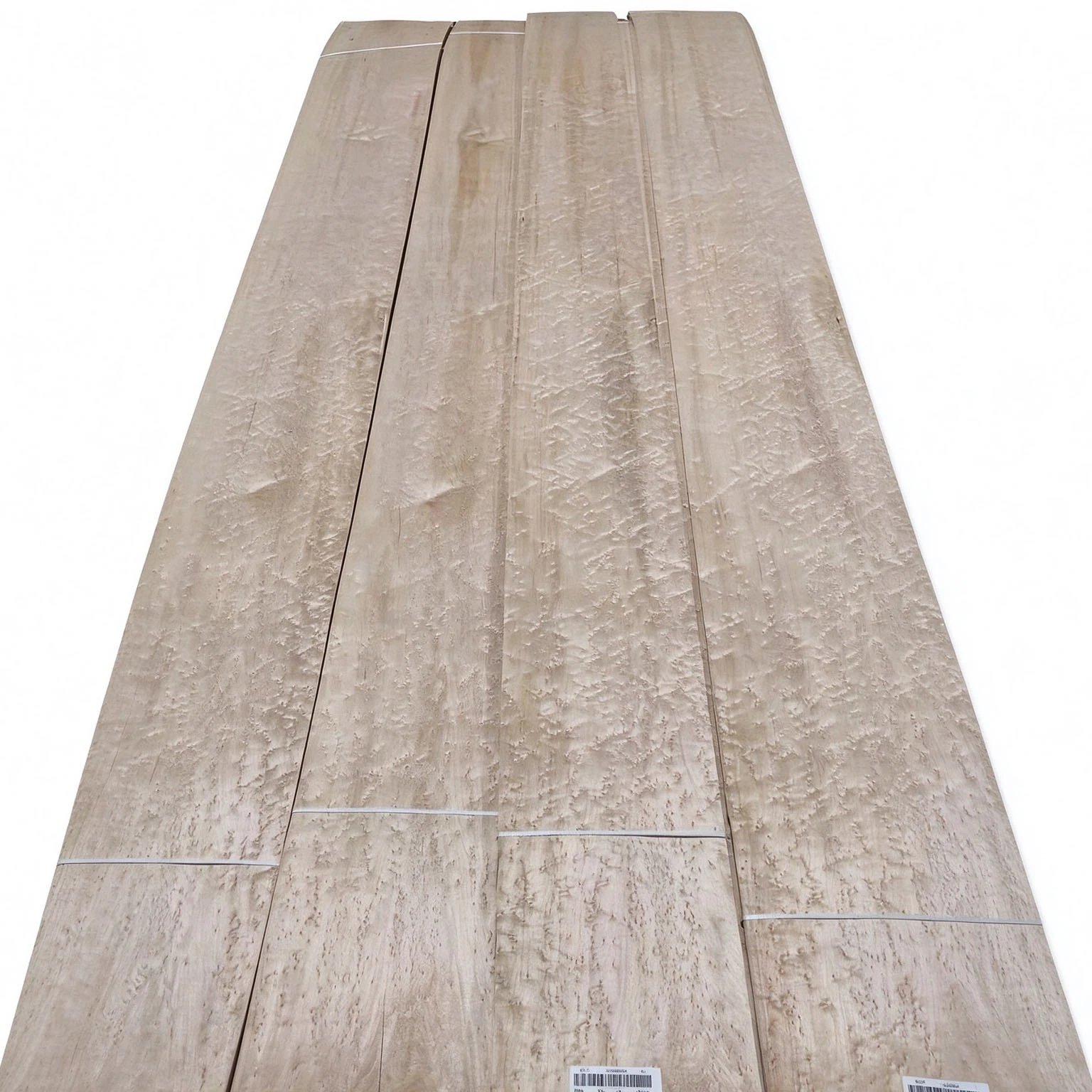
Maple Bird Eye Veneer, also known as Bird's Eye Maple Veneer, is a decorative natural wood veneer valued for its distinctive bird's-eye grain pattern, smooth texture, and elegant light color. It is typically sourced from sugar maple (Acer saccharum) found in North America.
The most recognizable feature of this veneer is its numerous small, rounded markings that resemble the eyes of birds. These naturally occurring patterns create a unique visual effect across the wood surface, making each sheet different from the others.
With its creamy white to pale golden appearance and subtle natural luster, Maple Bird Eye Veneer is an excellent choice for premium furniture, luxury interior decoration, decorative wall panels, cabinetry, and specialty woodworking projects.
Product Features
Unique Bird's-Eye Grain
The most distinctive characteristic of Maple Bird Eye Veneer is its small, eye-like grain pattern distributed across the surface. The density, size, and arrangement of these markings vary naturally, giving every veneer sheet its own individual appearance.
Elegant Natural Color
Maple Bird Eye Veneer typically features creamy white, ivory, pale beige, and light golden tones. Its bright color complements modern, minimalist, contemporary, and classic interior designs.
Fine and Smooth Texture
Maple is known for its fine, relatively uniform texture. When properly prepared and finished, the veneer can provide a smooth, refined surface suitable for high-quality decorative applications.
Excellent Decorative Potential
The combination of distinctive grain, subtle color variations, and natural luster makes this veneer especially suitable for projects where material appearance is an important design element.
Versatile Finishing Options
Depending on the project requirements, Maple Bird Eye Veneer can be finished with clear coatings, stains, or other compatible wood finishes. A transparent finish is often preferred when the goal is to preserve its natural color and highlight the bird's-eye figure.
Storage and Processing Recommendations
To maintain veneer quality, store the material in a clean, dry, and well-ventilated environment. Keep the sheets flat and protect them from direct sunlight, excessive moisture, and sudden changes in temperature or humidity.
During processing, ensure that the substrate is clean, flat, and suitable for veneer bonding. Use an adhesive and pressing procedure compatible with the veneer thickness and substrate. Before applying stains or topcoats to the full surface, conduct a small finishing test to confirm the desired color and appearance.
For large furniture panels or architectural installations, inspect and arrange the sheets in advance to achieve a consistent visual effect.