

Hey there! I'm a supplier of Wood Veneer Burl, and I often get asked if our product can be used in high - humidity environments. It's a valid question, and in this blog, I'm gonna break it down for you.
First off, let's understand what wood veneer burl is. Wood veneer burl is a thin layer of wood cut from a burl, which is a growth on a tree trunk or branch. These burls have a unique and beautiful grain pattern, making the veneer highly sought - after for furniture, cabinetry, and interior design. We've got some really cool options like Madrone Burl Veneer and Madrone Burl Wood Veneer Natura, and Mappa Burl Veneer. They look amazing, but the question remains: how do they hold up in high humidity?
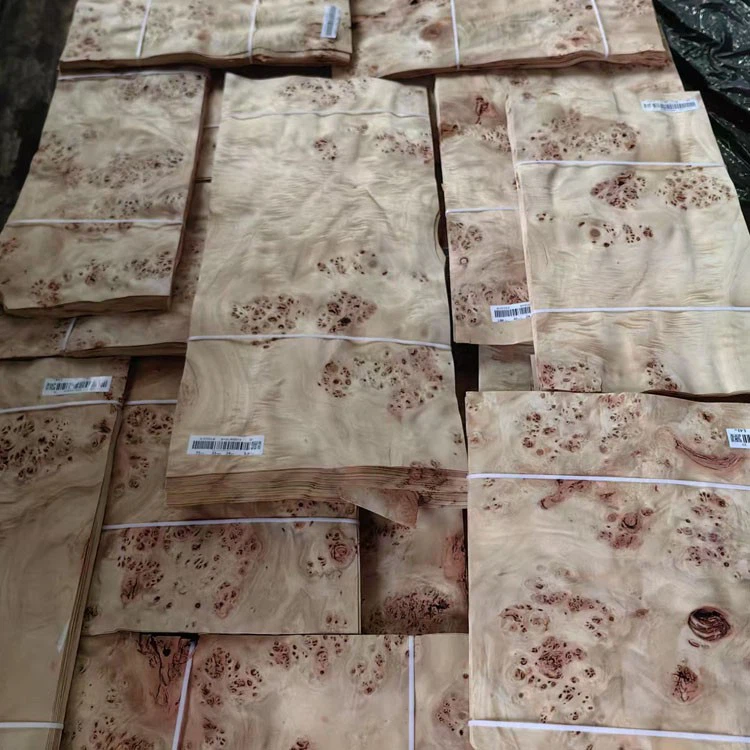
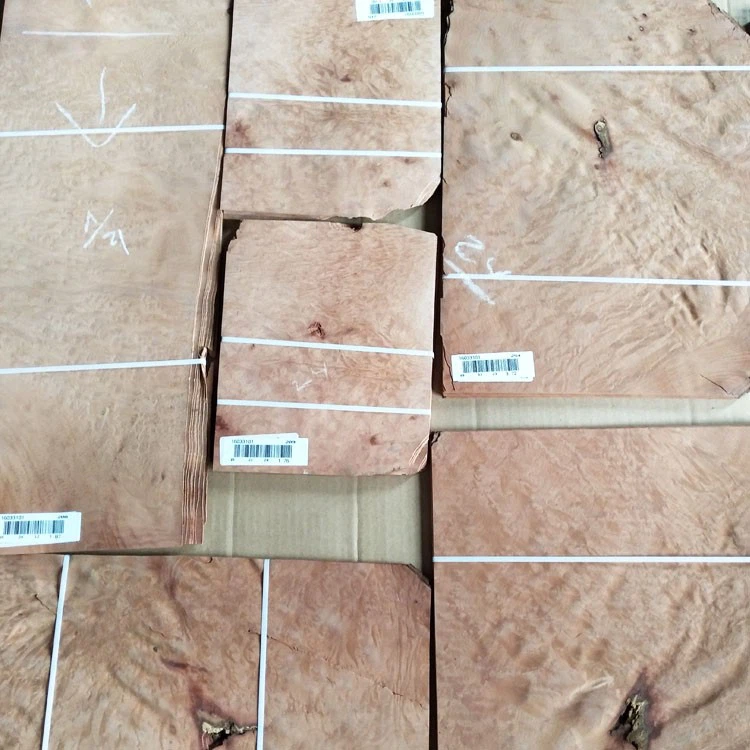
Wood is a natural material, and it has a property called hygroscopy. This means it can absorb and release moisture from the surrounding environment. In high - humidity conditions, wood tends to absorb more moisture. When wood takes in moisture, it can expand. And when the humidity drops, it contracts. This expansion and contraction can cause a bunch of problems for wood veneer burl.
One of the main issues is warping. As the veneer absorbs moisture and expands unevenly, it can start to warp or buckle. This not only looks bad but can also affect the functionality of the product it's used on. For example, if it's on a cabinet door, the door might not close properly anymore. Another problem is delamination. Wood veneer is usually glued onto a substrate. In high humidity, the glue can weaken, causing the veneer to separate from the substrate. And let's not forget about mold and mildew. High humidity provides the perfect conditions for these fungi to grow on the wood veneer, which can damage the appearance and integrity of the veneer.
But hey, it's not all doom and gloom! There are ways to use wood veneer burl in high - humidity environments. First of all, proper sealing is crucial. Applying a high - quality sealant to the veneer can create a barrier that prevents moisture from penetrating the wood. There are different types of sealants available, like varnishes, lacquers, and polyurethanes. Each has its own pros and cons, so it's important to choose the right one for your specific application.
Another thing to consider is the substrate. Using a moisture - resistant substrate can help reduce the impact of high humidity on the veneer. For example, some engineered wood products are designed to be more resistant to moisture than traditional wood. Also, controlling the humidity in the environment can make a big difference. Using a dehumidifier in a room with wood veneer burl can help keep the humidity at a stable level, reducing the risk of damage to the veneer.
When it comes to installation, it's important to leave some space for the veneer to expand and contract. This can be done by leaving a small gap between the edges of the veneer or using flexible joints. This way, when the veneer expands in high humidity, it has room to do so without causing warping or other damage.
Now, let's talk about real - world examples. I've had customers who've used our wood veneer burl in bathrooms and kitchens, which are typically high - humidity areas. Some of them followed the proper precautions, like sealing the veneer and controlling the humidity, and they've had great results. The veneer has maintained its beautiful appearance and functionality for years. On the other hand, some customers who didn't take these steps have faced issues like warping and delamination.
So, can wood veneer burl be used in high - humidity environments? The answer is yes, but with some precautions. If you're willing to put in the effort to properly seal, install, and maintain the veneer, and control the humidity in the environment, you can enjoy the beauty of wood veneer burl even in high - humidity areas.
If you're interested in using our wood veneer burl for your project, whether it's in a high - humidity environment or not, I'd love to have a chat with you. We can discuss your specific needs, the best type of veneer for your project, and how to ensure its long - term durability. Just reach out, and we can start the conversation.
References
- Forest Products Laboratory. (2010). Wood Handbook: Wood as an Engineering Material. United States Department of Agriculture, Forest Service.
- Wilson, R. J. (2014). Wood Finishing: A Complete Guide to Choosing and Using the Right Finishes. Taunton Press.