

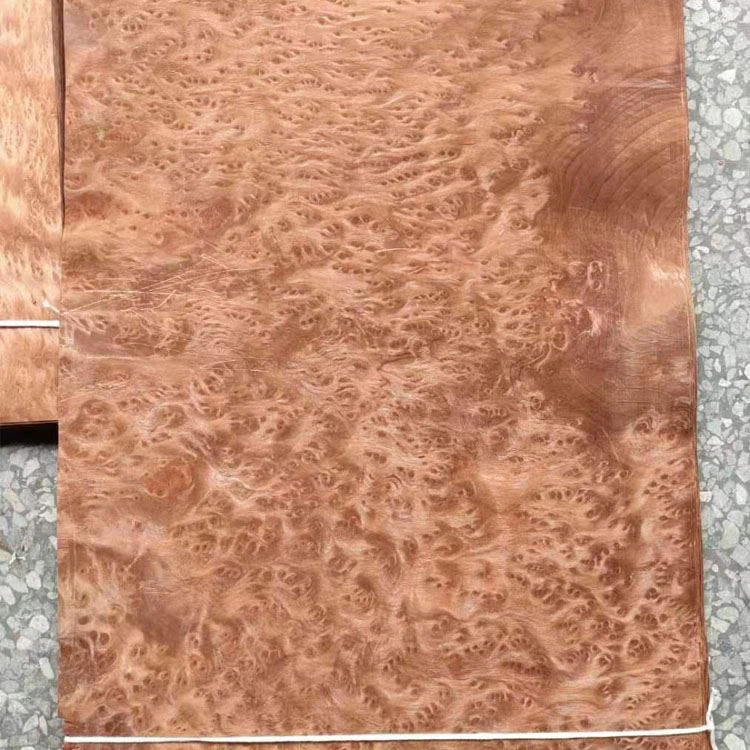
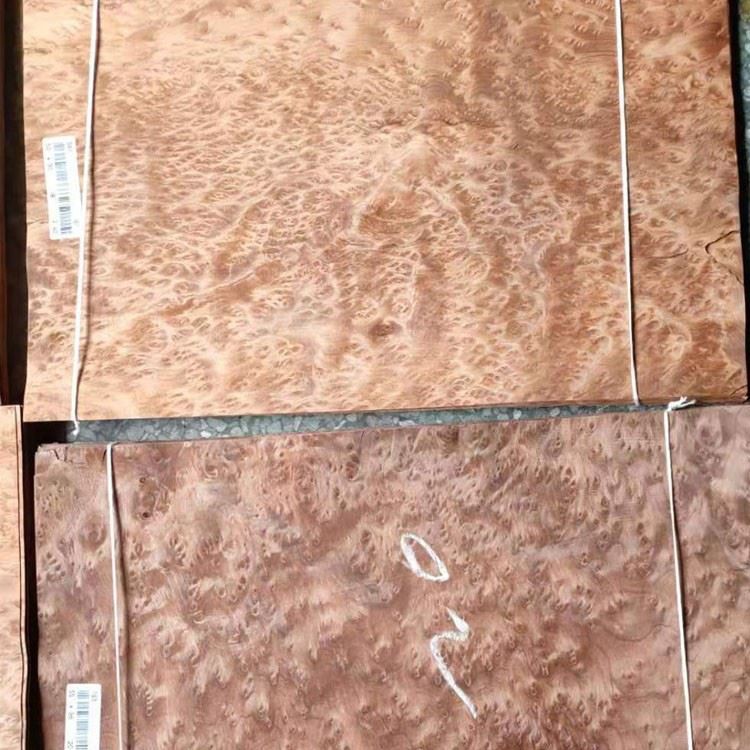


The color of the redwood burl veneer ranges from light pinkish brown to deep reddish brown. The sapwood is white/yellow, with rolled shadows or redwood tree tumors. Scars are a naturally formed pathological phenomenon for redwood, and their rare and exquisite patterns are considered by modern people to be the most valuable treasures for appreciation and collection in redwood patterns.

Products Description
Product drawing


| Brand | Grid Swell | Length | 1.2-3.2M |
| Processing Method | Sliced Cut | Width | 12CM+ |
| Color | Red | Authentication | ISO,FSC |
| Usage | Plywood/MDF/HDF/Particle board Wall Panels | Minimum order quantity | 1000 sheets |
| Moisture content | 12-18% | Wood Veneer Grade | AAA/AA/A |
| Thickness | 0.2-1.0MM | Shipping Port | Shanghai,Ningbo,Dalian Linyi |
| Supply Ability | 20x40'container/per month | Loading | 20 GP 8 Pallets about 22-25 CBM,40 HQ 18 Pallets about 50-55 CBM |
| Payment Term | T/T,L/C,Western Union | Origin distribution | USA |
| Package | Plywood pallet+ Plastic bag+ Steel tape |
characteristic
Redwood has the characteristic of dense quality, with fine particles and particularly high hardness, so special attention should be paid to making redwood furniture. In the production of rosewood products, special techniques must be used to maximize the high-quality material of rosewood.
The texture of redwood is very beautiful and varies greatly. Over time, the color and texture of redwood will gradually change, becoming darker and more beautiful. Therefore, redwood furniture has special value in the market and can be applied in both classical and modern style homes.
The characteristics of redwood also include its bright color, which is reddish brown and very eye-catching. Meanwhile, due to its long service life and resistance to fading, redwood has a very stable price in the market.
Redwood has a noble atmosphere and is often used in the production of high-end furniture. Redwood furniture can showcase an elegant and atmospheric temperament, which is a very important traditional cultural element.

How to cooperate with factories?
1.Communicate requirements and details.
Clarify your own needs with the factory, such as product specifications, quantity, delivery time, and packaging methods, while also understanding the details of our factory's production capacity, payment methods, and after-sales service.
2.Sign contracts and make payments.
Sign a formal contract with the factory to regulate the rights and obligations of both parties and avoid disputes in the future
3.Follow up on production and shipment.
Regularly communicate with the factory to understand the production progress and quality situation. If there are any problems, please consult with us in a timely manner to solve them
4.Receiving and inspecting goods
Timely inspect the goods upon receipt, check whether the products meet the contract requirements, whether the quantity is correct, and whether there is any damage. If there are any issues, please contact our factory in a timely manner to negotiate compensation or return/exchange plans.


certificate

FAQ
